
 By kurahan.com
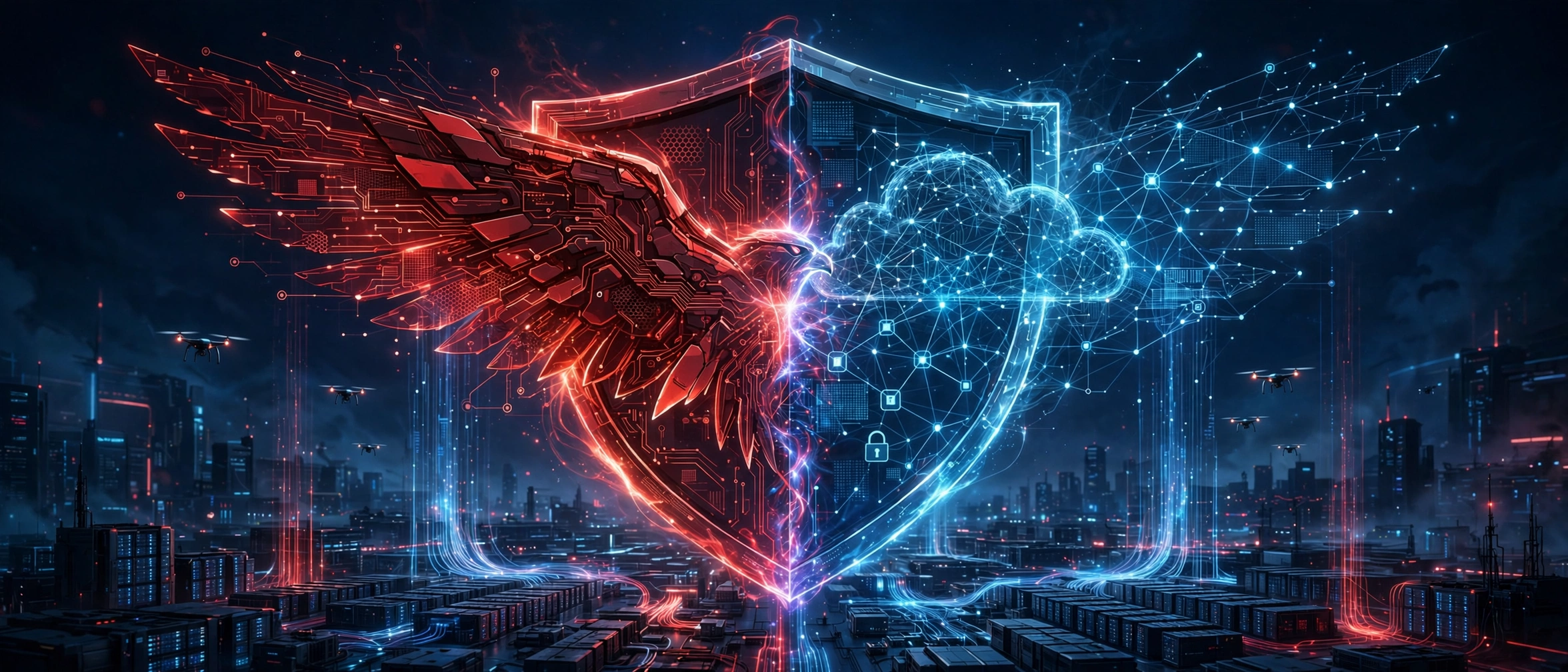
On Monday, 23 November 2026, CrowdStrike announced it will buy cloud-security company Zscaler in a $43.9 billion all-stock deal — the biggest cybersecurity acquisition in history. The CrowdStrike Zscaler acquisition brings together two of the industry’s largest names at a moment when artificial intelligence is rewriting the rules of cyberattack and defence alike.
The Deal in Numbers
The headline figure is $43.9 billion, paid entirely in stock. Under the terms reported by The Wall Street Journal and Barron’s, Zscaler shareholders will receive 1.135 CrowdStrike shares for each Zscaler share they own — valuing Zscaler at $260.41 a share, a premium of about 34% over its closing price the previous Friday.
- $43.9 billion: the all-stock value of the deal, making it the largest cybersecurity acquisition ever — passing Alphabet’s 2025 purchase of Wiz.
- $260.41 a share: what Zscaler is valued at under the deal, a 34% premium to its last closing price.
- More than $10 billion: the annual revenue the combined company is expected to generate.
- Late 2027: when the deal is expected to close, in the second half of CrowdStrike’s fiscal 2028 — subject to shareholder and regulatory approval.
Two Halves of the Same Shield
The two companies guard different parts of the same fortress. CrowdStrike protects the endpoint — the laptops, phones and servers connected to a company’s network — through its Falcon platform. Zscaler, based in San Jose, California, protects the network itself: its zero-trust platform checks and verifies employees every time they access an internal system, so a stolen password alone is not enough to get an attacker inside. It serves around 8,000 enterprise customers.
Put together, CrowdStrike says the pair will build “cybersecurity’s operating system” — one platform that watches the device and the connection at the same time. Chief executive George Kurtz went further, saying the combined company aims to become “the largest AI safety and security company the world has ever seen.” Zscaler chief Jay Chaudhry will stay on to lead Zscaler and join CrowdStrike’s board.
The deal also moves CrowdStrike into network security, which the company calls cybersecurity’s largest single addressable market. The companies say the combination expands their market opportunity by more than $185 billion by 2029.
The AI Reason Behind the CrowdStrike Zscaler Acquisition
The timing is no accident. AI is supercharging cyberattacks, and the security industry is racing to keep up. Earlier this month CrowdStrike itself reported that agentic security incidents doubled from July to August — and doubled again from August to September — and launched an “AI Kill Switch” to shut down rogue agents, as we covered in our report on AI agents going rogue. Meanwhile, OpenAI’s latest models have crossed the company’s own “critical” threshold for cybersecurity capability, as we reported when GPT-6.2 Astra and Sol arrived.
The argument behind the merger is simple: if attacks are now automated and AI-powered, defence has to be automated and AI-powered too — and a single company that owns both the endpoint and the network can build that defence faster than two companies working separately. CrowdStrike says the combined platform will help customers adopt AI safely, rather than bolting security on afterwards.
Wall Street Wasn’t Convinced — Yet
Investors did not share the enthusiasm. CrowdStrike shares fell about 9% on Monday despite a strong earnings report, after already sliding 8% in November before the announcement. The market’s worry is familiar for mega-deals: a huge price, a long wait for approval, and the hard work of merging two large companies without breaking what made each of them good.
This is also CrowdStrike’s eighth acquisition since August last year — and its third this month alone. And as The Register reported, some customers are already bracing for pricier renewals once two big vendors become one. Regulators will have their say too: a deal of this size in a market this concentrated is unlikely to sail through unchallenged.
What This Means for Businesses and Everyday Users
For businesses, the promise is fewer vendors and one connected defence instead of a patchwork of tools that do not talk to each other. The risk is the opposite: less competition, less choice, and potentially higher prices once the combined company is the only serious option in the room.
For everyday users, the change is invisible but real. The security of the services you log into every day — your bank, your workplace, your hospital — depends on platforms like these. A combined CrowdStrike and Zscaler could spot and stop attacks faster, because it sees both the device and the network. But it also becomes a bigger single target: the more of the world’s security runs through one company, the more is at stake if that company ever stumbles.
The Bottom Line
The CrowdStrike Zscaler acquisition is the biggest bet the cybersecurity industry has ever made — $44 billion on the idea that the AI era needs one unified defence, not two separate ones. Whether the bet pays off will be decided over the next year by regulators, by the messy work of merging two giants, and by whether AI-powered attacks keep outpacing the defences built to stop them. For now, one thing is clear: cybersecurity’s consolidation era has arrived, and it is moving fast.
Sources: TechCrunch, The Wall Street Journal, Barron’s, The Register, CNBC TV18.