
 By kurahan.com
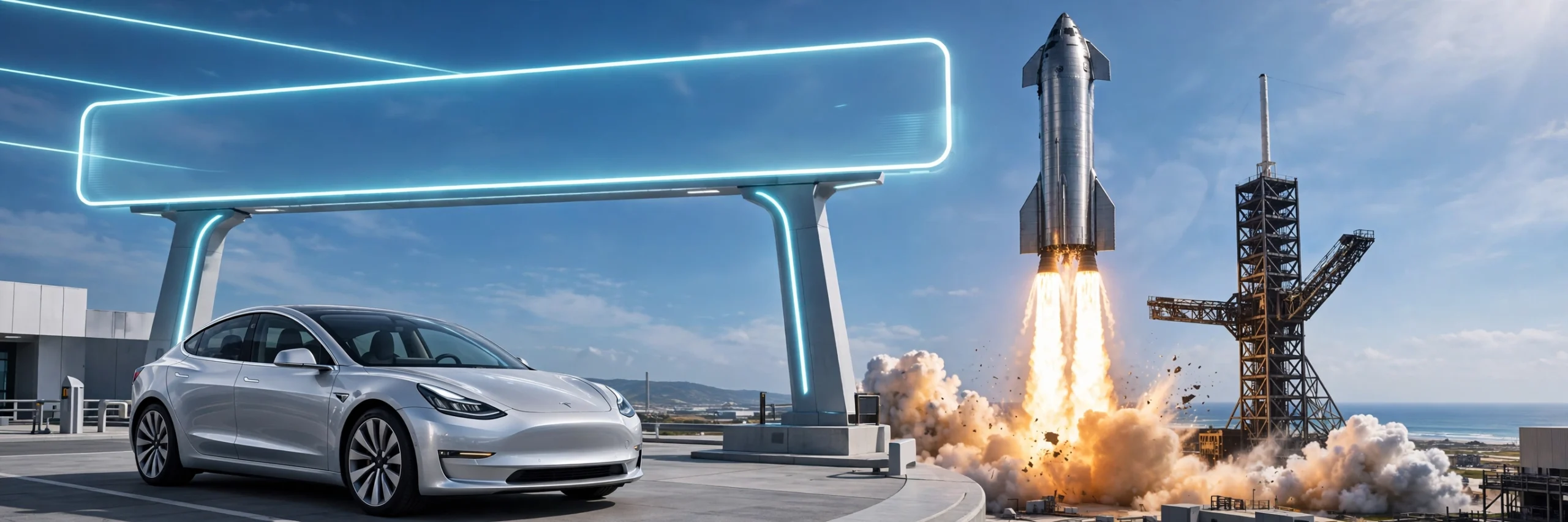
Elon Musk’s two biggest companies are moving toward a union that would dwarf every merger that came before it. According to the Financial Times, Tesla and SpaceX have appointed special committees of directors to negotiate an all-stock Tesla SpaceX merger, with a potential year-end deadline and a combined value of roughly $3.5 trillion. If it happens, the deal would join electric cars, rockets, satellites, robots and artificial intelligence under one roof — with the new Congress, sworn in on 3 January, watching closely.
The Deal Taking Shape
On 24 November, the Financial Times reported that both companies have named the directors who will negotiate for them. Tesla’s special committee is chaired by Robyn Denholm, alongside Kathleen Wilson-Thompson and Jack Hartung, and is advised by the investment bank Evercore. SpaceX is represented by Roelof Botha and Randy Glein, with Morgan Stanley and Goldman Sachs as advisers.
Musk himself is excluded from the negotiations: as chief executive and a major shareholder of both companies, he is a conflicted party. The bankers are now building the financial models that will anchor each side’s position.
Bloomberg reported earlier in November that a deal could be announced as early as December. The Financial Times adds that the talks are “moving towards a potential year-end deadline” — even though people familiar with the negotiations say an agreement is not yet close.
Why $3.5 Trillion — and Why Now
SpaceX is valued at roughly $1.7 trillion and Tesla at about $1.5 trillion, putting a combined group at around $3.2–3.5 trillion — one of the five most valuable companies in the world, and by far the largest merger ever.
Timing matters too: the new US Congress is sworn in on 3 January, and Democrats have promised to investigate Musk’s companies, so a deal signed by year-end would land before that scrutiny begins. The Tesla SpaceX merger is therefore racing two clocks at once: the negotiating table, and the political calendar.
What One Company Would Actually Do
On paper, the logic is the empire Musk has described for years: SpaceX builds rockets and the Starlink network, Tesla builds electric cars, batteries and humanoid robots, and both are pouring resources into AI. Musk said on SpaceX’s October earnings call that a merger would unify his AI, robotics, EV and aerospace ambitions under one roof.
The combination would also share technology in both directions: SpaceX’s manufacturing scale and satellite communications could feed into Tesla’s cars and robots, while Tesla’s AI work — its Optimus humanoid robot and self-driving software — could find new uses inside SpaceX. It is a vision of one vertically integrated machine: cars, rockets, satellites, robots and the AI that runs them.
The Hurdles Are Just as Big as the Prize
A deal this size faces obstacles at every stage. First, Tesla needs the support of more than 50% of all outstanding shares — not just votes cast — at a separate extraordinary shareholder meeting, a high bar for any deal.
Then comes regulation: a combined company would face antitrust review, SpaceX’s US defence contracts raise national-security questions, and Tesla’s reliance on China adds political sensitivity as Washington tightens technology controls.
- Shareholder approval: Tesla needs over 50% of all outstanding shares, not just votes cast.
- Antitrust review: A $3.5 trillion combination would draw scrutiny from regulators in the US and beyond.
- National security: SpaceX’s defence work and Tesla’s China exposure both invite political questions.
- The deadline: Talks are “not close” yet, but a year-end target is now in play.
What This Means for the EV and Space Industries
For the car industry, the Tesla SpaceX merger would redraw the competitive map: Tesla is already the world’s most valuable carmaker, and folded into a $3.5 trillion group with rockets and satellites, it would stop being a car company in any conventional sense. Rivals from BYD to legacy automakers would be competing with a conglomerate that also controls the orbital infrastructure above their heads.
For space, the deal would give SpaceX access to Tesla’s manufacturing scale and public-market capital, potentially accelerating Starship and Starlink. For investors, the question is whether one giant company is worth more than two focused ones — or whether the complexity of merging rockets and cars destroys value instead of creating it.
The Bottom Line
The Tesla SpaceX merger is still a negotiation, not a done deal. But the pieces are in place: named committees, hired bankers, a December announcement window and a year-end deadline. If the two sides agree terms, the result would be the largest merger in corporate history and a company unlike anything the world has seen. If they cannot, the talks will still have redrawn the map of what Musk’s empire might become. Either way, December is the month to watch.