
 By kurahan.com
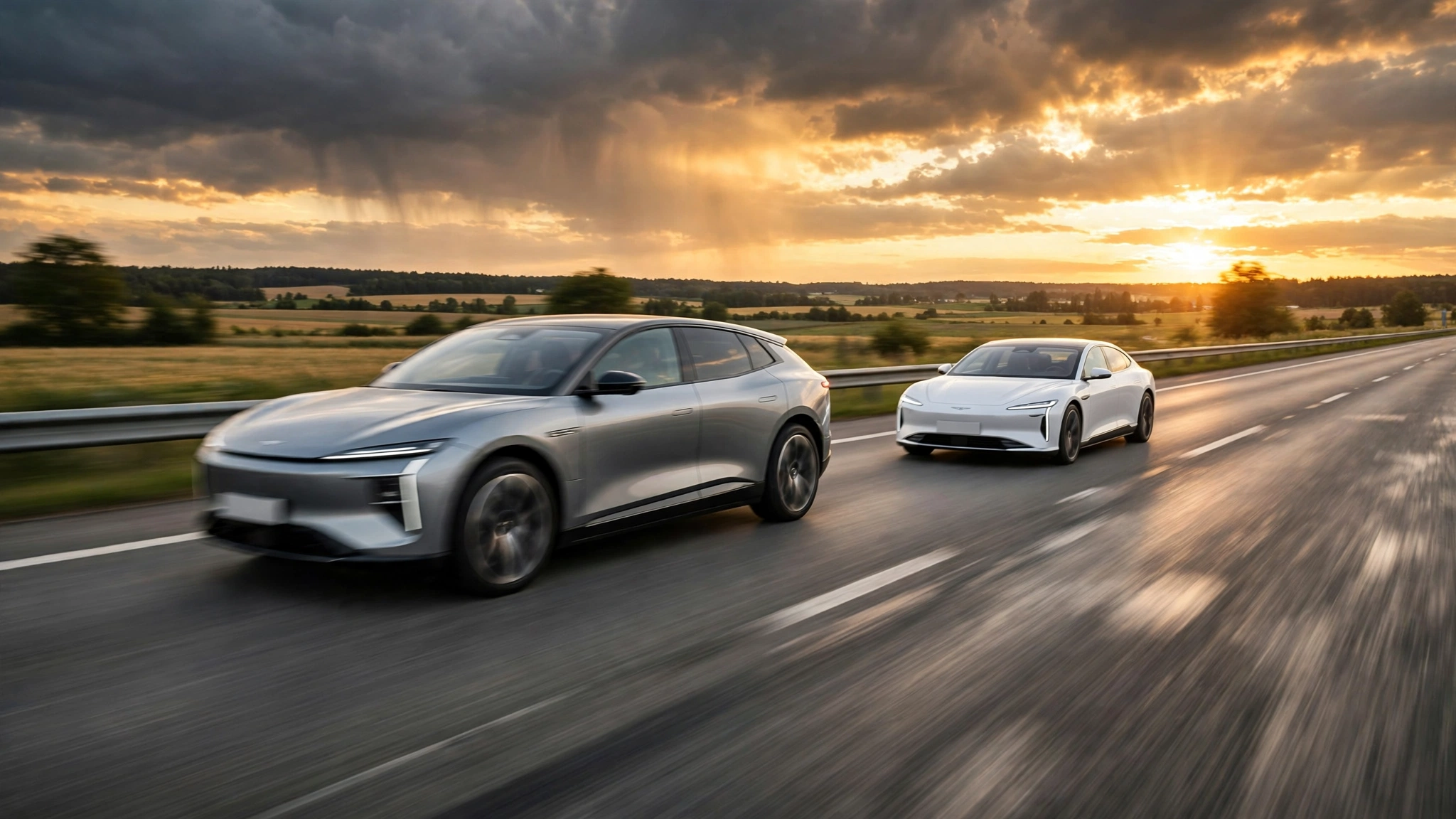
BYD overtakes Tesla in Europe — that is the headline the electric car world has been waiting for, and October 2026 is the month it finally happened. For the first time ever, the Chinese carmaker registered more fully electric cars in Europe than Tesla, ending a dominance that has lasted since Tesla first shipped the Model 3 across the Atlantic.
The margin was razor-thin, but the symbolism is enormous. According to registration figures reported by BVI News on November 17, BYD recorded 7,231 fully electric cars in Europe last month, against 7,165 for Tesla. Sixty-six cars. That is all that separated the two companies — and yet it marks the moment the EV race stopped being a one-horse contest.
It is a remarkable turnaround for a brand that only began selling cars beyond Norway and the Netherlands in late 2022. In four years, BYD has gone from a curiosity on European roads to the company setting the pace.
The Numbers Behind the Overtake
The headline figure is only part of the story. Independent registration tracker evstats.org paints an even wider gap once plug-in hybrids are included: across the 11 European countries that publish every brand, BYD registered 20,753 cars in October — battery-electric and plug-in hybrid combined — against 6,481 for Tesla, and BYD was ahead in 10 of those 11 countries.
Tesla fans will rightly point out that the comparison is not quite like-for-like. Every Tesla is a pure battery-electric car, while much of BYD’s volume comes from plug-in hybrids. But even on a battery-electric-only basis, BYD still leads: in the nine countries that split out powertrains, BYD registered 6,440 pure EVs against Tesla’s 5,718.
Germany tells the same story in miniature. Europe’s biggest car market registered a record 94,086 battery-electric cars in October — a 37% share of all new cars, and the second month in a row that EVs outsold petrol and diesel combined, according to data from the Federal Motor Transport Authority (KBA) reported by Electrek. Tesla registered 2,932 cars there, up almost 291% on a year earlier. BYD registered 5,173. For the year so far, BYD has now edged ahead of Tesla in Germany too, 47,961 to 47,742.
The pattern repeated across the continent. In Switzerland, BYD registered 835 cars in October to Tesla’s 124 — nearly seven to one — leaving BYD just 38 cars behind Tesla for the whole year. In Spain, Tesla’s Model 3 was the single best-selling EV of the month, yet BYD still registered more electric cars overall.
How BYD Did It: Price, Range and a Car for Every Buyer
BYD’s rise has not come from one hit model. It has come from breadth. Where Tesla sells essentially two cars in volume — the Model 3 and Model Y — BYD now fields a full line-up, from compact hatchbacks to seven-seat plug-in hybrid SUVs, and it keeps adding to it. The company has also launched its premium Denza brand in India and opened pre-sales for a third-generation Tang EV in China, priced from 225,000 yuan with a claimed range of up to 850 km.
- A car at almost every price point. BYD’s range runs from affordable city cars to premium SUVs, while Tesla’s line-up starts much higher.
- Hybrids as a bridge. Plug-in hybrids let cautious buyers go electric for daily driving without range anxiety — and they count in the sales race.
- Local factories, local workers. BYD is building plants and hiring locally across its overseas markets, a strategy its chairman highlighted at the APEC CEO Summit in Shenzhen this week.
- Speed. BYD’s model cycle is far faster than the legacy industry’s — new and updated cars arrive in months, not years.
The Japan story shows the same playbook at work. BYD has just passed 10,000 cumulative passenger-car sales in Japan, reaching its second 5,000 much faster than its first, according to InsideEVs. Its weapon there is the Racco, a tiny electric kei car built specifically for Japanese tastes: it starts at ¥2.145 million, attracted 1,002 orders in its first two weeks on sale, and sold 607 cars in October — closing in on the Nissan Sakura, Japan’s long-time electric bestseller.
Tesla Is Not Standing Still — But It Is Spread Thin
None of this means Tesla is collapsing. Its German registrations nearly quadrupled year-on-year in October, and its year-to-date European total is up 56% on 2025. Tesla’s sales also swing wildly with its quarterly delivery cycle — it registered 12,552 cars in Germany in September, the last month of the quarter, against 2,932 in October. December, the next quarter-end, will decide the year’s final order.
But Tesla is fighting on many fronts at once. The company is winding down Cybertruck production by mid-2027 to free up its Texas factory for the Cybercab robotaxi, as we reported earlier this month — a bet that the future is driverless rather than another conventional model. Meanwhile, Chinese rivals are not just outselling Tesla in Europe: Leapmotor registered 3,661 cars in Germany in October, also ahead of Tesla, and XPeng’s German registrations climbed 284%.
The pressure is showing in the share price too. BYD’s Hong Kong-listed shares have slipped in recent days as analysts question the profitability of its overseas expansion, a Dutch court ordered Jaguar Land Rover to destroy files seized from BYD in an intellectual-property dispute, and 14 members of the European Parliament have asked the European Commission to assess cybersecurity risks from BYD vehicles. Winning the sales race and winning the profit race are two different things.
What This Means for Car Buyers
For anyone shopping for an electric car, the BYD overtakes Tesla moment is genuinely good news. Competition is arriving in force, and it is arriving at lower prices. BYD’s success in Japan with a ¥2.145 million kei car shows what happens when an EV maker builds for a market instead of importing a global car and hoping for the best — and European buyers are already seeing the same effect, with more choice at every price point.
For Tesla, the message is that brand alone no longer wins the month. The Model 3 is still the best-selling single EV in markets like Spain, but a single hero model cannot hold off a rival selling five or six models across every segment. Tesla’s answer, the Cybercab, is a bold bet on a different future — but it will not be on sale in volume for some time, and BYD is winning the present.
The Bottom Line
October 2026 will be remembered as the month BYD overtook Tesla in Europe — by 66 cars in the headline count, and by a far wider margin once hybrids are included. The gap is small enough that Tesla could take the crown back in December, when its quarter-end delivery surge lands. But the direction of travel is now clear: the EV crown is no longer Tesla’s by default. It has to be defended, month by month, against a rival that is faster, cheaper and everywhere at once. The electric car race just got a real contest — and buyers are the winners.